
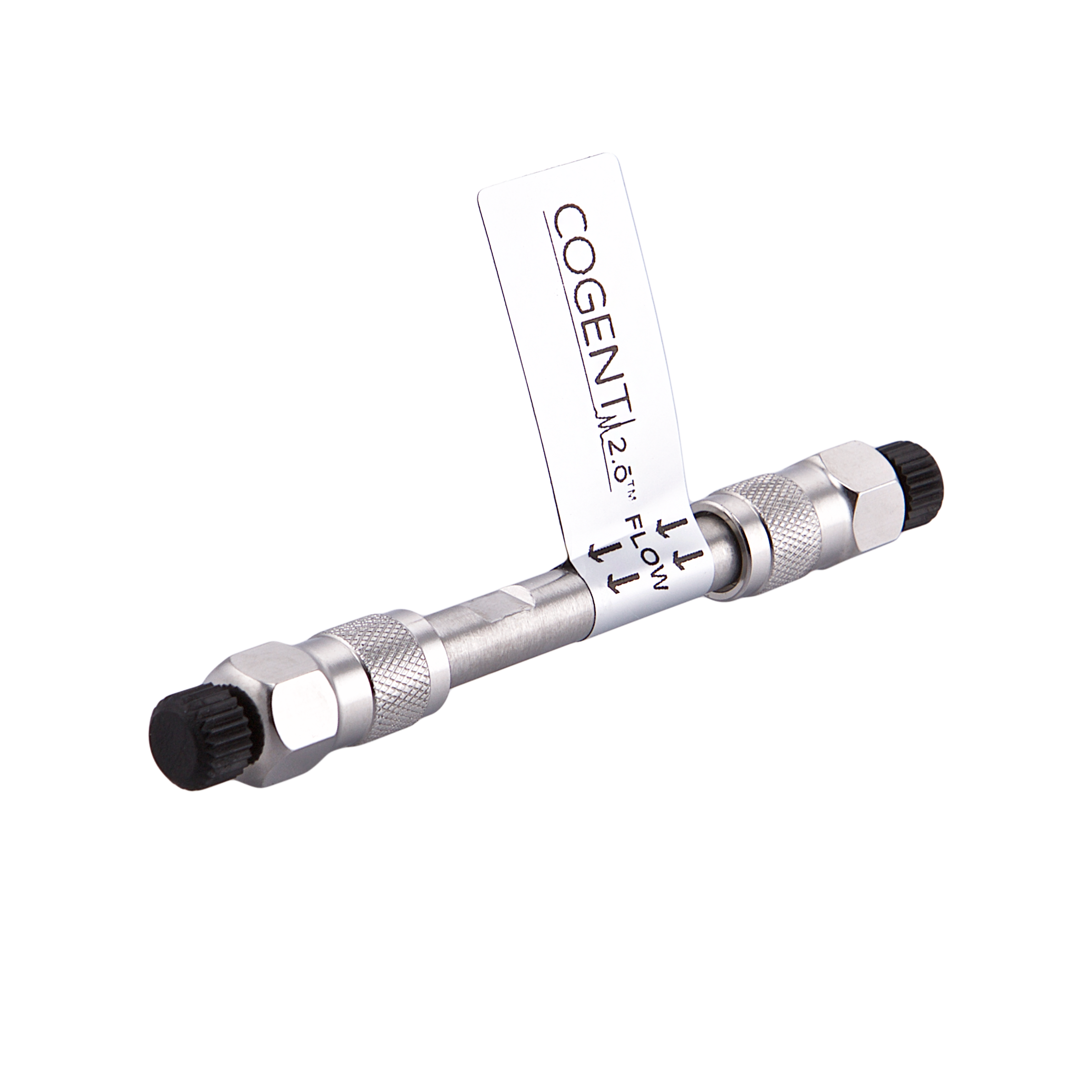
HPLC Column, Diol 2.o, 2.2um, 2.1mm ID x 50mm Length, 120A. Cogent TYPE-C Brand. 1 EA.
Additional Information:
The 40260‑05P‑2 Diol 2.o™ HPLC Column is manufactured using Cogent TYPE‑C™ silica hydride technology, combining the classical selectivity of Diol chemistry with the performance advantages of a silica hydride surface. The 2.2 µm particle size delivers increased efficiency, excellent selectivity, and faster equilibration than conventional bonded‑silica diol phases, while remaining compatible with non‑UHPLC instruments under typical operating conditions.
This Diol 2.o™ column is considered “near‑UHPLC”, allowing laboratories to achieve sharper peaks and higher efficiency on standard HPLC systems without requiring UHPLC‑rated pressures.
Application Focus: Diol Chemistry for HILIC & Polar Compounds
Diol stationary phases are widely selected for HILIC and normal‑phase chromatography due to their strong hydrophilicity and predictable hydrogen‑bonding interactions. The Diol 2.o™ phase is particularly effective for polar compounds that exhibit poor or no retention in reversed‑phase methods, including:
Amino acids
Polar metabolites
Small biological and biomarker compounds
Other highly water‑soluble analytes
When operated in HILIC mode, this column is considered mass‑spectrometry friendly, supporting MS‑compatible mobile phases while maintaining strong retention and reproducible selectivity for polar analytes.
Cogent TYPE‑C™ Performance Advantages
Unlike traditional bonded‑silica diol columns, Diol 2.o™ is built on a silica hydride surface, which provides measurable advantages in routine operation:
Faster equilibration than conventional silica‑based diol phases
Improved peak efficiency from the smaller 2.2 µm particles
Excellent selectivity for difficult polar compounds
Greater stability and reproducibility during gradient HILIC methods
The silica hydride surface helps reduce excessive water‑layer dependence, resulting in more consistent retention and shorter re‑equilibration times between runs.
Why Choose the 2.1 mm × 50 mm Format
The short, narrow‑bore geometry is optimized for speed, sensitivity, and solvent efficiency, making it a favorite for LC‑MS workflows:
Short run times and rapid throughput
Fast equilibration between injections
Reduced solvent consumption and waste
Lower flow to the MS source, improving ionization efficiency
This size is especially well‑suited for high‑throughput analysis of polar analytes by LC‑MS and LC‑MS/MS.
Particle Size and Efficiency
The 2.2 µm particle size provides near‑UHPLC separation efficiency, producing narrow, symmetrical peaks while avoiding the high backpressures typically associated with sub‑2 µm UHPLC columns under common operating conditions.
LC‑MS‑Focused Operation
The reduced internal volume of the 2.1 mm ID column supports:
Improved signal‑to‑noise ratios
Sharper peak shapes
Reliable quantitative performance
These attributes make the Diol 2.o™ column well suited for metabolomics, bioanalysis, and trace‑level polar compound workflows.
System Requirements and Flow Rates
Typical flow range (2.1 mm ID): ~0.2–0.3 mL/min
System capability: Requires a pump capable of accurate, stable low‑flow delivery
Important note: Not all standard HPLC pumps or flow cells are suitable for precise operation at these reduced flow rates
Final flow‑rate selection should account for mobile‑phase viscosity, column temperature, and system pressure limits.