
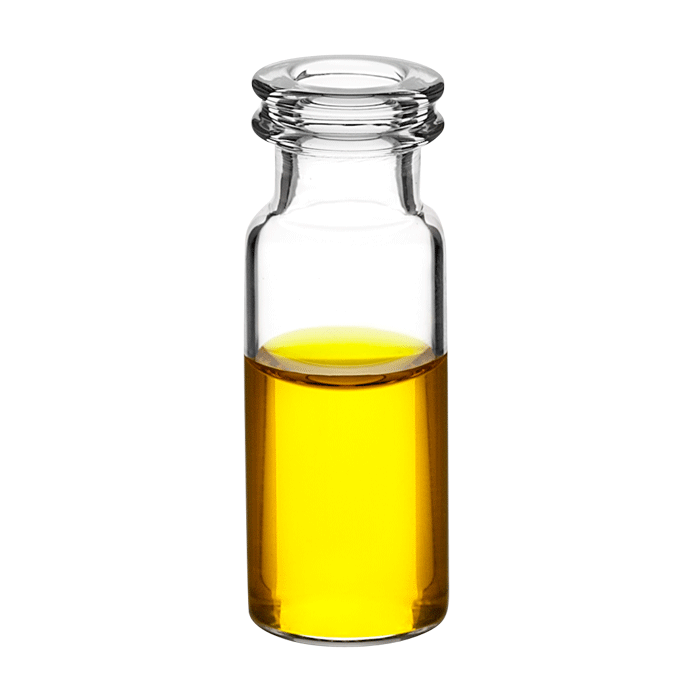
Vials, Snap Top, Glass. Clear, 2ml. An 11mm snap-ring and 12x32mm outer dimensions. For use as an autosampler vial. BASIK Brand. 100/PK.
Additional Information:
The 9502C‑E‑0CV snap‑top autosampler vial is a 2.0 mL clear glass vial designed for routine chromatographic workflows where reliability, consistency, and cost efficiency are key considerations. These vials are manufactured from first hydrolytic, Class A, pharmaceutical‑grade borosilicate glass, providing dependable chemical performance for everyday analytical use.
This vial is widely adopted in laboratories looking for consistent autosampler compatibility without premium cost. Its standard geometry supports reliable aspiration and injection across common autosampler platforms, making it a dependable choice for high‑throughput environments.
As one of the most frequently selected vials in its category, it offers strong performance at an economical price point, supporting budget‑conscious laboratories without compromising usability.
Key Features
Standard Autosampler Geometry
Consistent vial dimensions for reliable autosampling
Compatible with common autosampler systems
Supports repeatable injections
Borosilicate Glass Construction
First hydrolytic, Class A, pharmaceutical‑grade borosilicate glass
Clear glass for full sample visibility
Suitable for routine chromatography workflows
Value‑Focused Design
Proven performance at a low cost
Ideal for high‑volume laboratory use
Supports cost‑efficient analytical operations
Why Choose 2.0 mL BASIK™ Snap‑Top Autosampler Vials?
The 9502C‑E‑0CV is selected when laboratories need:
Reliable 2.0 mL snap‑top autosampler vials for daily use
Consistent performance across large sample sets
Pharmaceutical‑grade glass at an economical price
A trusted vial for high‑throughput workflows
These vials are commonly used in QC laboratories, contract testing facilities, teaching labs, and routine analytical environments where cost control and dependable performance are essential.
Typical Applications
HPLC, UHPLC, LC‑MS, and LC‑MS/MS autosampling
Routine and high‑throughput chromatography
Quality control testing
Method development and general laboratory analysis