
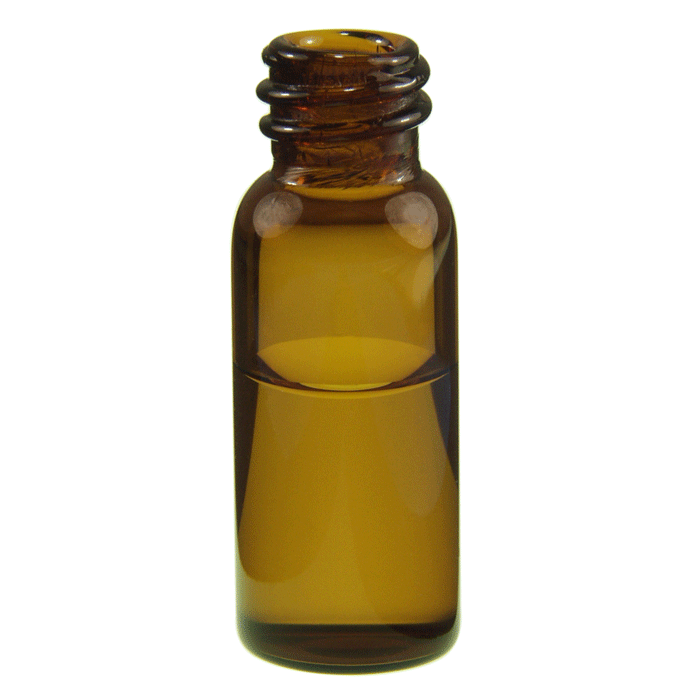
Vials, Screw Top, Glass. Amber, 2ml, 8-425mm threads, 12x32mm outer dimensions. For use as an autosampler vial or storage bottle. BASIK Brand. 100/PK.
Additional Information:
The 9582S‑0AV BASIK™ Amber Screw‑Top Autosampler Vial is a simple, economical 2 mL vial designed for light‑sensitive samples and routine storage or autosampling where evaporation reduction and cost control are priorities. Manufactured from first hydrolytic, Class A amberized borosilicate glass, the vial provides dependable chemical durability and low‑actinic light protection.
The narrow 8‑425 opening may help reduce solvent evaporation compared to wider‑mouth formats and requires an 8 mm screw cap. This design makes the vial particularly useful for sample storage, retention, and stability testing, in addition to everyday autosampler use.
As the lowest‑cost amber vial in its class, this SKU is well suited for laboratories managing high sample volumes and strict consumables budgets.
Key Features
Amber Borosilicate Glass (Low Actinic)
First hydrolytic, Class A borosilicate glass
Amberized to protect light‑sensitive compounds
Suitable for routine analytical and storage applications
Narrow‑Mouth 8‑425 Thread Design
Smaller opening than standard 9‑425 vials
May help limit evaporation during storage
Requires 8‑425 screw caps and septa
Standard Autosampler & Storage Compatibility
12 × 32 mm format fits common autosampler trays
Suitable for autosampler injections or storage bottles
Designed for routine, non‑critical workflows
Lowest Cost in Class
Most economical amber 2 mL screw‑top vial
Ideal for high‑volume and budget‑conscious laboratories
Why Choose BASIK™ Amber Narrow‑Mouth Vials?
The 9582S‑0AV is selected when laboratories need:
A low‑cost amber vial for light protection
Narrow‑mouth geometry for reduced evaporation
A dependable option for storage and routine autosampling
A practical alternative when premium surface treatments are unnecessary
Common use cases include stability studies, sample retention, QC workflows, and teaching laboratories.
Typical Applications
Stability testing
Sample storage and retention
Light‑sensitive analytes
Routine HPLC autosampling
Quality control workflows