Date: 31-MARCH-2013 Last Updated: 6-SEPTEMBER-2026
Introduction
While most chromatographers focus on stationary phase chemistry, column hardware materials can also play an important role in chromatographic performance. The composition of the hardware that surrounds the stationary phase may influence:
- Mechanical strength
- Corrosion resistance
- Surface interactions
- Pressure tolerance
- Compatibility with metal-sensitive analytes
Understanding the properties of commonly used materials can help when selecting columns for routine analyses, LC-MS applications, and metal-sensitive compounds.
Stainless Steel in HPLC Columns
Stainless steel remains the most widely used material for HPLC column hardware because it combines:
- High mechanical strength
- Excellent pressure resistance
- Good chemical resistance
- Long service life
- Cost-effectiveness
These properties make stainless steel suitable for both HPLC and UHPLC applications where high operating pressures are common.
Cogent HPLC Column Hardware
Cogent HPLC stainless steel column hardware is manufactured using: T1 Grade, AISI 316L Stainless Steel. AISI 316L is a low-carbon stainless steel alloy that offers improved corrosion resistance and is widely used in analytical instrumentation and chromatography hardware.
The material provides excellent durability for routine laboratory applications while maintaining compatibility with a wide range of mobile phases.
HPLC System Tubing Materials
Many HPLC systems utilize: AISI 316 Stainless Steel Tubing often referred to as: T2 Grade
This material is commonly found in:
- Pump tubing
- Instrument plumbing
- Connection fittings
- Fluid-path components
Its combination of strength and corrosion resistance makes it a standard material throughout chromatography systems.
Alternative Hardware Materials
Although stainless steel performs well in most applications, certain analytes may interact with exposed metal surfaces. To address these situations, alternative hardware options are available.
Coated Stainless Steel Hardware
Surface-coated hardware can help reduce:
- Metal-analyte interactions
- Adsorption effects
- Recovery losses
- Peak shape distortion
These materials are often useful for metal-sensitive compounds and highly polar analytes.
PEEK Hardware
PEEK (Polyether Ether Ketone) is a chemically resistant polymer frequently used in chromatography.
Benefits include:
- Metal-free flow paths
- Broad chemical compatibility
- Low analyte interaction
- Reduced risk of corrosion
PEEK may be useful for applications where metal exposure must be minimized.
Titanium Hardware
Titanium hardware is often selected for highly demanding chromatographic and bioanalytical applications.
Potential advantages include:
- Exceptional corrosion resistance
- Reduced metal reactivity
- High mechanical strength
- Compatibility with challenging mobile phases
Titanium is often considered when working with compounds known to interact strongly with stainless steel surfaces.
Stainless Steel Composition Data
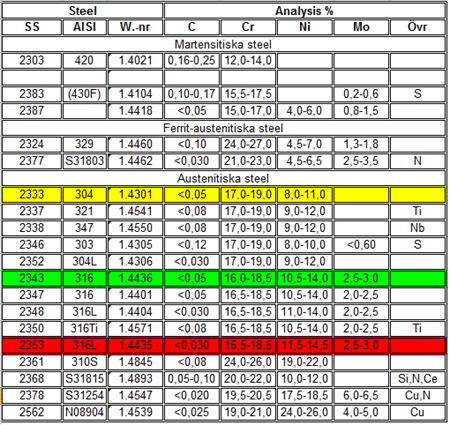
Elemental composition comparison of various stainless steel grades used in chromatography hardware and laboratory tubing applications.
Titanium Grade 3 Specifications
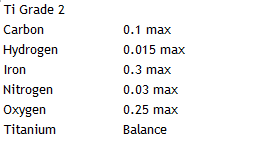
Titanium Grade 3 material specifications commonly referenced for high-performance chromatography hardware applications.
Why Material Selection Matters
Hardware composition can become particularly important when analyzing:
- Metal-sensitive compounds
- Chelating agents
- Organic acids
- Phosphorylated compounds
- Biomolecules
- Trace-level analytes
In these cases, interactions with metallic surfaces may influence:
- Peak shape
- Recovery
- Retention behavior
- Quantitative accuracy
Selecting the appropriate hardware material can help improve method robustness and analytical performance.
Applications Requiring Alternative Hardware
Chromatographers may consider coated stainless steel, titanium, or PEEK when working with:
- LC-MS methods
- Biopharmaceutical analyses
- Highly polar compounds
- Metal-binding analytes
- Recovery-sensitive methods
- Trace-level quantitation
The optimal choice depends on the analyte, mobile phase, and performance requirements of the method.
Conclusion
AISI 316L stainless steel remains one of the most common materials used in HPLC column hardware because of its strength, corrosion resistance, and pressure capability. However, alternative materials such as coated stainless steel, PEEK, and titanium are available for applications requiring reduced metal interactions. Understanding the composition and characteristics of these materials helps chromatographers select the most appropriate hardware for their analytical requirements.