Overview
Sample loops are fundamental components of both manual injectors and many automated injection systems used in HPLC. Their purpose is to hold a precisely defined volume of sample before the injection process transfers that sample into the chromatographic flow path.
Because injection precision directly affects quantitative accuracy, sample loops are manufactured to tight dimensional specifications that ensure consistent and reproducible sample delivery.
Whether used for analytical HPLC, UHPLC, LC-MS, or preparative applications, the sample loop serves as the metered volume chamber that determines the amount of sample introduced into the system.
How Sample Loops Work
A sample loop is a section of tubing manufactured to contain a specific internal volume.
During the loading process:
- The loop is filled with sample.
- Excess sample may be flushed from the loop depending on the injection technique.
- The injector switches position.
- Mobile phase carries the sample from the loop to the column.
The accuracy of the injected volume is determined by the calibrated internal volume of the loop rather than the amount of sample initially loaded into the injector.
Why Sample Loops Are Important
Properly designed sample loops help provide:
- Accurate injection volumes
- Reproducible analytical results
- Consistent peak areas
- Reliable quantitative performance
- Compatibility with high-pressure systems
Because injection variability can significantly affect analytical data, loop construction and dimensional accuracy are critical.
Why Sample Loops Look Different
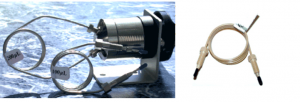
Many users notice that some sample loops appear as tightly wound coils while others appear nearly straight. This difference is often misunderstood. The appearance of the loop is simply a consequence of tubing length required to achieve a specific internal volume.
Larger-Volume Sample Loops
Higher-volume loops require greater tubing length. To keep the assembly compact, manufacturers typically form these loops into multiple visible coils.
Characteristics include:
- Multiple tubing turns
- Larger internal volume
- Compact installation footprint
The coiled appearance is normal and does not affect performance.
Smaller-Volume Sample Loops
Lower-volume loops require much less tubing length. Because the tubing section is shorter, there may not be enough length to create visible coils.
Characteristics include:
- Straight or nearly straight appearance
- Short tubing length
- Small internal volume
These loops operate exactly the same way as larger coiled versions.
Internal Volume Determines Performance
The critical performance characteristic of any sample loop is its calibrated internal volume.
The loop's external shape:
- Does not affect injection accuracy
- Does not affect reproducibility
- Does not affect delivered sample volume
- Does not determine chromatographic performance
A straight loop and a coiled loop with the same calibrated volume will deliver equivalent injection volumes when used under proper operating conditions.
Selecting a Sample Loop
Sample loop selection should be based on:
- Desired injection volume
- Injector compatibility
- Analytical sensitivity requirements
- Sample availability
- Method requirements
Choosing the proper loop size helps optimize precision and reduce sample waste.
Applications
Sample loops are commonly used in:
- Manual HPLC injectors
- UHPLC systems
- LC-MS systems
- Preparative chromatography
- Method development laboratories
- Routine quality control testing
A wide range of calibrated volumes is available to support different analytical requirements.
Key Takeaways
- Sample loops are precision-calibrated tubing assemblies used for accurate sample injection.
- Injection volume is determined by internal loop volume, not external appearance.
- Larger-volume loops often appear as coils because more tubing length is required.
- Smaller-volume loops may appear straight because less tubing length is needed.
- Loop shape does not affect injection precision or chromatographic performance.
- Proper sample loop selection supports accurate and reproducible analytical results.
Additional Resources
For sample loop volumes, injector compatibility information, tubing specifications, and product selection guidance, view: Sample Loop Specifications, Volume Options, and Application Resources