
Overview
Ion Chromatography methods are often performed at very low concentration levels where contamination from sample containers, closures, and septa can influence analytical results. For this reason, cap and vial selection should be considered part of the overall method design rather than simply a sample containment requirement.
The ideal closure system for IC applications minimizes ionic contributions while maintaining sample integrity throughout storage and autosampler operation.
Closure Material Considerations
Unlike many HPLC and GC applications, Ion Chromatography methods are particularly sensitive to background ions that may originate from sample-contact materials.
Potential sources of unwanted contamination include:
- Closure materials
- Septa additives
- Elastomer components
- Manufacturing residues
- Sample container surfaces
Careful selection of cap materials can help reduce these potential sources of interference.
Polyethylene Caps for Low-Ion Background Applications
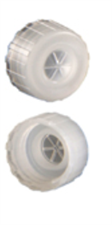
Ultra-pure polyethylene (PE) screw caps are often preferred for sensitive IC applications because they are designed to minimize ionic extractables and background contamination.
Benefits may include:
- Low ionic contribution
- Reduced extractables
- Improved blank performance
- Compatibility with trace ion analyses
These caps are commonly selected when minimizing background conductivity or ion contamination is a primary objective.
Single-Use Closure Design
Many ultra-pure polyethylene IC caps are intended for single-use operation.
After autosampler needle penetration:
- The cap may not reseal effectively.
- Reuse is generally not recommended.
- Sample integrity may be compromised if reused.
This design eliminates the need for elastomeric resealing layers that could contribute ionic contaminants to the sample.
Compatibility with Polypropylene Vials
When minimizing ionic background is important, polypropylene (PP) autosampler vials are often used with polyethylene screw caps.
Advantages of polypropylene may include:
- Low ionic extractables
- Broad compatibility with aqueous IC samples
- Reduced risk of glass-derived contamination
- Suitability for routine ion analysis
The cap and vial should be considered together as a complete sample containment system.
Alternative Closure Systems
Some LC and GC closure systems utilize PTFE/silicone septa designed primarily for chromatographic cleanliness in organic analytical applications.
These cap systems may perform well for:
- HPLC
- UHPLC
- LC-MS
- GC applications
However, they are generally optimized for low organic extractables rather than minimizing ionic background in IC workflows.
For highly sensitive IC methods, polyethylene closures are often preferred.
Selecting a Closure for Your IC Method
Trace-Level Ion Analysis
Recommended:
- Ultra-pure polyethylene screw caps
- Polypropylene vials
Suitable for:
- Low-level anions
- Low-level cations
- High-sensitivity IC methods
- Regulatory testing
Routine Ion Analysis
Depending on method requirements:
- Polyethylene closures remain preferred
- Alternative cap systems may be acceptable for less demanding applications
Method validation requirements should guide the final selection.
Best Practices
For critical IC methods:
- Use low-background sample containers.
- Select caps specifically intended for ion analysis.
- Avoid reusing single-use closures.
- Verify blank performance when changing components.
- Evaluate new cap and vial lots as part of routine quality practices.
These measures can help maintain low background levels and improve analytical consistency.
Key Takeaways
- Cap selection can influence Ion Chromatography performance.
- Polyethylene screw caps are often preferred because of their low ionic background characteristics.
- Single-use closures help eliminate potential contamination from resealing materials.
- Polypropylene vials are commonly paired with IC-compatible caps.
- Low-extractable closure systems can improve trace-level ion measurements.
- Cap and vial selection should be considered during method development and validation.
Additional Resources
- For IC-compatible closures, low-background materials, cap specifications, product images, and ordering information, view: IC-Compatible Polyethylene Screw Caps, Low-Background Materials, and Ordering Resources
- For polypropylene vial specifications, ion chromatography sample containers, low-extractable materials, product images, and ordering information, view: Polypropylene Autosampler Vials for Ion Chromatography Applications and Sample Preparation