Polyols present a challenge for traditional reversed-phase methods because of their high hydrophilicity and limited interaction with hydrophobic stationary phases. The Cogent Diamond Hydride™ Column offers an effective alternative by promoting retention of polar compounds in high-organic mobile phase in this ELSD method that is easily transferrable to RI or LC-MS.
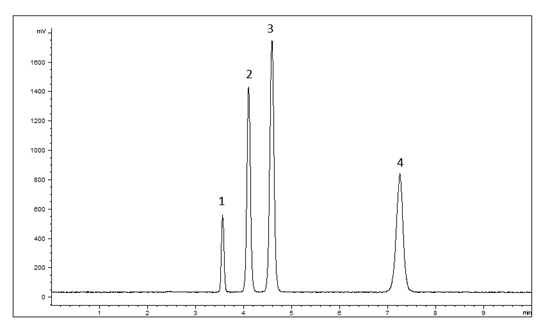
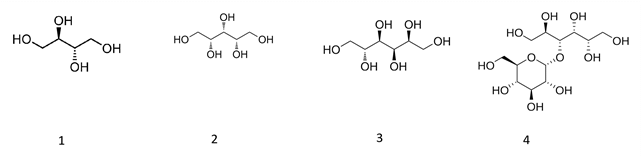
Peaks: 1. Erythritol 2. Xylitol 3. Sorbitol 4. Maltitol
Method Conditions:
Column:
Cogent Diamond Hydride™, 4 μm, 100 Å
Catalog No.:
70000-15D
Dimensions:
4.6 x 150 mm
Mobile Phase:
90%
Acetonitrile / 10% DI water / 0.1%
Formic acid
(v/v)
Flow Rate:
1.0 mL / minute
Detection:
ELSD with a Gain 12, Temp 65C, Nitrogen: 3.5lb
Injection Volume:
1 uL
Sample Preparation:
Individual stock solutions of erythritol, xylitol, sorbitol, and maltitol were prepared at 4 mg/mL in DI water. A mixed working standard was prepared by combining 150 µL of each stock solution and diluting with 400 µL of 50:50 acetonitrile/DI water to a final volume of 1.0 mL. The resulting concentration of each analyte was 0.60 mg/mL.
Note: Sugar alcohols (polyols) are widely used as low-calorie sweeteners in foods, beverages, pharmaceutical formulations, and personal care products.