Date: 17-SEPTEMBER-2026 Last Updated: 18-SEPTEMBER-2026
Separating Parent Drug, a Related Impurity, and a Closely Related Pharmaceutical Analog
Introduction
A Cogent Phenyl Hydride™ HPLC column was used to separate chlorothiazide, hydrochlorothiazide, and 4-amino-6-chloro-1,3-benzenedisulfonamide in a single chromatographic analysis. The three compounds are structurally related and contain sulfonamide functionality, making chromatographic selectivity an important consideration for their separation.
The method separates the related compound from chlorothiazide and hydrochlorothiazide and demonstrates the selectivity of the Phenyl Hydride stationary phase for this group of closely related analytes.
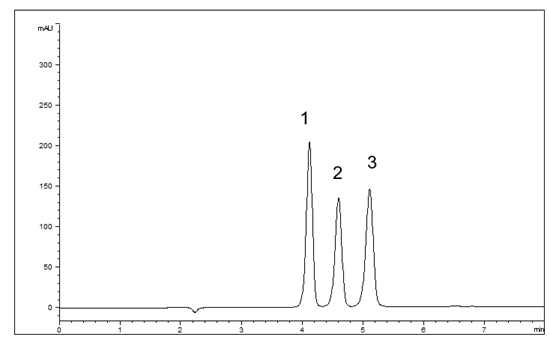
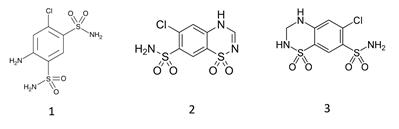
Peaks:
1. 4-Amino-6-chloro-1,3-benzenedisulfonamide 2.
Chlorothiazide
3. Hydrochlorothiazide
Method Conditions
Column:
Cogent Phenyl Hydride™, 4 μm, 100 Å
Catalog No.
:
69020-15P
Dimensions
: 4.6 x 150 mm
Mobile Phase
: 80:20 DI Water /
Acetonitrile /
0.1% formic acid
Injection vol.
: 1μL
Flow rate
: 1.0 mL/minute
Detection
: UV @ 224 nm
Sample Preparation
: Equal volumes (100 µL) of chlorothiazide (1.55 mg/mL), hydrochlorothiazide (1.56 mg/mL), and 4-amino-6-chloro-1,3-benzenedisulfonamide (1.57 mg/mL) stock solutions were combined and diluted to 1.0 mL with 50:50 ACN:DI water, yielding final concentrations of 0.155, 0.156, and 0.157 mg/mL, respectively.
Note: The thiazide diuretics, beginning with chlorothiazide and followed by hydrochlorothiazide, revolutionized the treatment of high blood pressure by providing the first effective oral therapies that could be used long term.