
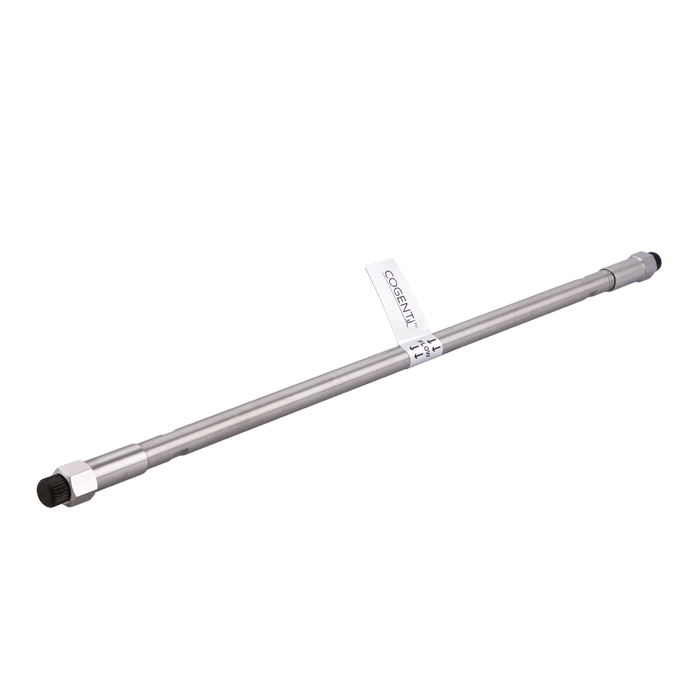
HPLC Column, Silica-C 300, 5um, 4.6mm ID x 250mm Length, 300A. Cogent TYPE-C Brand. 1 EA.
Additional Information:
The 40000‑25P‑3M Silica‑C™ 300 HPLC Column is manufactured using Cogent TYPE‑C™ silica hydride technology, delivering distinct selectivity, rapid equilibration, and robust performance for HILIC and normal‑phase separations of large molecules. Unlike conventional bonded‑silica phases, this unmodified silica hydride surface contains no end‑capping or organic ligands, providing stable retention behavior and excellent reproducibility—particularly important in moisture‑sensitive normal‑phase workflows.
With a 300 Å pore size and 5 µm particle diameter, this column is optimized for macromolecular analytes that require increased pore accessibility and extended retention.
Application Focus: Silica‑C™ 300 for Large‑Molecule HILIC & Normal‑Phase Separations
Silica‑C™ 300 stationary phases are chosen for compounds that are not soluble in water or require non‑polar or minimally aqueous mobile phases, especially when analyte size limits performance on conventional 100 Å columns. This column is particularly effective for:
Proteins
Large peptides
Oligonucleotides
Polysaccharides
Other macromolecules requiring non‑polar solvents or HILIC conditions
The silica hydride surface provides moisture‑tolerant performance and reproducible retention, outperforming conventional silica in large‑molecule normal‑phase applications.
Key Advantages of Silica‑C™ 300 TYPE‑C™ Technology
Compared to traditional bonded‑silica columns, Silica‑C™ 300 columns provide:
Faster equilibration between injections
No need to control moisture in mobile‑phase solvents
Robust column lifetime under demanding solvent systems
Improved access to large analytes due to wide pore structure
These attributes make Silica‑C™ 300 a dependable solution for consistent, high‑resolution macromolecule separations.
Why Choose the 4.6 mm × 250 mm, 300 Å Format
The 4.6 mm ID × 250 mm length with 300 Å pores is selected when maximum separation and extended retention are required for large, closely related compounds:
Highest resolving power for macromolecules within the Silica‑C™ family
Extended retention for proteins and polysaccharides
Excellent peak capacity for complex macromolecular mixtures
Standard analytical flow rates compatible with most HPLC systems
This long‑column, large‑pore format is commonly chosen when separation confidence outweighs shortest run time.
Particle Size and Performance
The 5 µm particle size provides a practical balance of resolving power, permeability, and robustness, supporting stable macromolecule separations with manageable backpressure on standard analytical HPLC systems.
System Requirements and Flow Rates
Typical flow range (4.6 mm ID): ~1.0–1.5 mL/min
System capability: Compatible with standard analytical HPLC systems
LC‑MS note: Use of a flow splitter is recommended when coupling to mass spectrometry
Flow‑rate optimization should consider mobile‑phase viscosity, column temperature, and system pressure limits.