
Stainless steel tubing is commonly used throughout HPLC systems due to its pressure tolerance, durability, and chemical compatibility. However, improper cutting techniques can deform tubing walls, create burrs, restrict flow paths, and introduce unwanted dead volume.
A properly cut tubing end should be:
- Flat and perpendicular
- Free of burrs and metal fragments
- Symmetrical and round
- Undeformed at the tubing walls
Poorly prepared tubing can negatively affect system performance, increase backpressure, contribute to leaks, and reduce chromatographic efficiency.
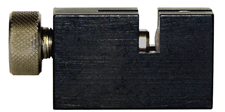
Recommended Tubing Cutter
How to Cut Stainless Steel Tubing Correctly
Step 1: Position the Tubing
- Insert the stainless steel tubing into the tubing cutter.
- Lightly tighten the cutter screw against the tubing surface.
- Avoid overtightening, as excessive pressure can deform the tubing walls before cutting begins.
Step 2: Rotate the Cutter
- Rotate the cutter around the tubing several times to begin scoring the surface.
- Allow the cutting wheel to gradually form a clean score line around the circumference.
Step 3: Gradually Tighten and Repeat
- Slightly tighten the cutter screw and continue rotating the cutter.
- Repeat the process several times while applying only small incremental adjustments.
- This gradual scoring method helps reduce tubing deformation and improves cut quality.
Step 4: Create a Distinct Score Line
- Continue scoring until a clean and clearly visible groove is formed around the tubing.
- Remove the tubing from the cutter once a distinct score has been established.
Step 5: Carefully Separate the Tubing
- Gently break the tubing at the scored location.
- Avoid bending, crushing, or distorting the tubing during separation.
- If the tubing does not separate cleanly, repeat the scoring procedure before attempting again.
Step 6: Remove Burrs and Finish the Ends
Once the tubing is separated:
- Ream the inside diameter
- File the outside edge
- Remove all burrs
- Remove any flared metal
- Inspect the tubing opening for symmetry
The tubing opening should remain round, smooth, and unobstructed.
Inspect the Finished Tubing
Before installation, verify the tubing end is:
- Square to the tubing axis
- Flat across the entire surface
- Free from burrs and debris
- Free from wall deformation
- Properly reamed and cleaned
Taking time to inspect tubing ends can help prevent connection issues and reduce unnecessary troubleshooting later.
Special Considerations for Thin-Wall Tubing
Thin-wall stainless steel tubing is generally more difficult to cut than thick-wall tubing.
Because thinner tubing walls are more susceptible to deformation, extra care should be taken to:
- Apply minimal cutting pressure
- Tighten the cutter gradually
- Avoid crushing the tubing
- Carefully inspect the finished cut
Tubing Cutter Specifications
- The tubing cutter cutting wheel has a thickness of approximately 0.36 mm.
- Understanding the cutting wheel thickness can help when precise tubing lengths are required.
Key Takeaways
- Proper tubing cuts are critical for reliable HPLC performance.
- Avoid overtightening the tubing cutter during scoring.
- Use gradual tightening and repeated rotations to create a clean score.
- Remove all burrs and flared metal after cutting.
- Ensure tubing ends remain flat, square, and free of deformation.
- Thin-wall tubing requires additional care to prevent damage.