Atropine Analyzed with an HPLC Gradient Method – AppNote
May 3, 2012
/
/
/
/
Date: 3-MAY-2012 Last Updated: 31-AUGUST-2026
No Ion Pair Reagent Necessary
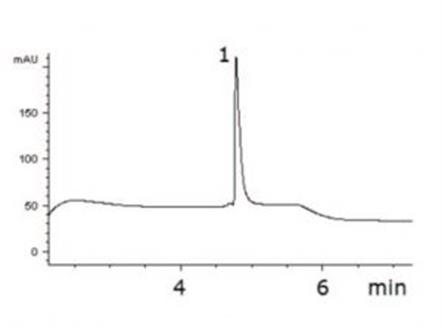
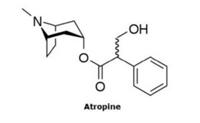
This method shows a symmetrical peak for Atropine using a simple Gradient Method that does not include any Ion Pair Reagents which can cause damage to Columns and lack reproducibility. The retention times are extremely repeatable but one of the best advantages to this method is the time savings between runs.
Peak:
Atropine
Injection 1: RT = 4.772 minutes
Injection 2: RT = 4.773 minutes
Injection 3: RT = 4.772 minutes
Injection 4: RT = 4.774 minutes
Column: Cogent Bidentate C18™, 4 μm, 100 Å
Catalog No.: 40018-7.5P
Dimensions: 4.6 x 75 mm
Mobile Phase:
-- A: DI Water + 0.1% Acetic Acid + 0.005% TFA
-- B: Acetonitrile + 0.1% Acetic Acid + 0.005% TFA
-- Both solutions were vacuum filtered through a 0.45µm Nylon Syringe Filter
Gradient:
| Time (minutes) | %B |
| 0 | 10 |
| 4 | 30 |
| 6 | 30 |
| 6.01 | 10 |
Detection: UV @ 214 nm
Injection vol.: 1 μL
Sample Preparation: Prepared in 50% Solution A / 50% Solution B, concentration 1 mg / mL and was filtered through a 0.45 µm Nylon Syringe Filter.
Note: After a simple sample clean up proce-dure, the Method can be applied for monitoring Atropine concentrations in biological specimens in cases of drug poisoning. The recoveries of Atropine added to drug-free specimens which were analyzed using the described method were satisfactory with coefficients of variation of 4% or less.