Acetyl-L-Carnitine in Plasma Analyzed with LC-MS - AppNote
March 26, 2013
/
/
/
Date: 26-MARCH-2013 Last Updated: 30-AUGUST-2026
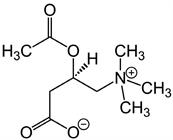
Spiked Plasma Samples with Acetyl-L-CarnitineThe Method in this Application Note was designed to be suitable for the routine analysis of Plasma Samples obtained from animal and human Pharmacokinetic studies in which Acetyl-L-Carnitine (ALC) is administered.
The calibration curve prepared for the Plasma Samples showed good Linearity (R2 = 0.999) and the Precision was good with low % RSD (0.2 and below ). The advantages of this Method over other published LC-MS methods are the short Equilibration Time between runs and the Repeatability (3 overlaid injections are presented in the Chromatogram below) . Also, this Method uses high organic content in the Mobile Phase, which is more suitable for MS and offers better ionization and improved signal to noise.
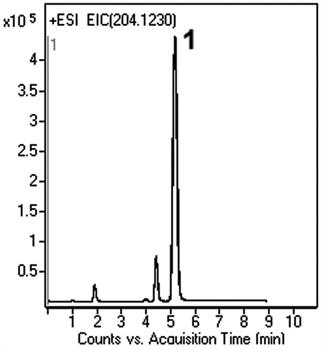
Peak: Acetyl-L-Carnitine (ALC) 204.1230 m/z [M+H]+
Method Conditions
Column: Cogent Diamond Hydride™, 4 μm, 100Å
Catalog No.: 70000-15P-2
Dimensions: 2.1 x 150 mm
Mobile Phase:
-- A: DI Water with 0.1% Formic Acid
-- B: Acetonitrile with 0.1% Formic Acid
Gradient:
| Time (minutes) | %B |
|---|---|
| 0 | 80 |
| 1 | 80 |
| 5 | 30 |
| 7 | 30 |
| 8 | 80 |
Post Time: 3 minutes
Injection vol.: 1 μL
Flow rate: 0.4 mL / minute
Detection: ESI – POS - Agilent 6210 MSD TOF Mass Spectrometer
Sample Preparation: Plasma from healthy individuals was spiked with an ALC standard solution and prepared for injections as described by Tallarico et al. [1] . To prepare standard curves dialyzed Plasma was used, to which known amounts of the analyte were added.
t 0 : 0.9 minutes
Note: ALC is used to improve mitochondrial function. ALC was proposed as an effective drug to be supplement in peripheral arterial disease so there is a need to study and fully understand the Pharmacokinetics of administered ALC.
[1] Carlo Tallarico, Silvia Pace, and Antonio Longo, Rapid Communications in Mass Spectrometry, Vol. 12, 403–409 (1998).