
Date: 21-AUGUST-2013 Last Updated: 4-SEPTEMBER-2026
Introduction
Mobile phase reservoir bottles are commonly used in HPLC, UHPLC, and LC-MS laboratories for solvent storage, mobile phase preparation, reagent handling, and buffer preparation. Occasionally, laboratories may need to heat solutions directly in these bottles during sample preparation or mobile phase preparation procedures.
Whether a bottle can be safely heated depends largely on the bottle construction and whether the bottle includes a protective safety coating.
Heating Non Coated Borosilicate Glass Bottles
Non-coated borosilicate glass mobile phase reservoir bottles can be used on a laboratory hot plate when proper laboratory practices are followed.
Borosilicate glass is widely used in laboratory environments because it offers:
- Excellent thermal stability
- Good resistance to thermal shock
- Broad chemical compatibility
- Suitability for many laboratory heating applications
For example, these bottles may be used to heat aqueous solutions such as water to its boiling point under controlled conditions.
Important Precautions During Heating
While borosilicate glass can tolerate elevated temperatures, several important precautions should always be observed.
Do Not Allow Liquids to Evaporate Completely
When heating solutions, the liquid should not be allowed to boil away completely.
If the bottle is heated after all liquid has evaporated:
- Excessive localized heating may occur
- Thermal stress may increase
- Glass damage may result
Maintaining an adequate liquid volume throughout the heating process helps reduce these risks.
Avoid Rapid Temperature Changes
Sudden temperature changes can place unnecessary stress on laboratory glassware.
For example:
- Do not add cold or cool liquid to a bottle that is already being heated.
- Avoid rapid heating or cooling cycles whenever possible.
Large temperature differences can increase the likelihood of glass breakage and liquid splashing.
Follow Laboratory Safety Procedures
All heating operations should be performed according to:
- Laboratory Standard Operating Procedures (SOPs)
- Institutional safety policies
- Equipment manufacturer recommendations
Proper laboratory safety practices should always take precedence over general guidance.
Safety Coated Bottles Are Different
This guidance does not apply to safety-coated mobile phase reservoir bottles. Safety-coated bottles have different construction characteristics and should not be heated on a hot plate or subjected to elevated-temperature heating conditions.
Before heating any bottle, confirm whether the bottle is:
- Non-coated borosilicate glass
- Safety-coated glass
Using the correct bottle type for the intended application helps maintain both safety and product performance.
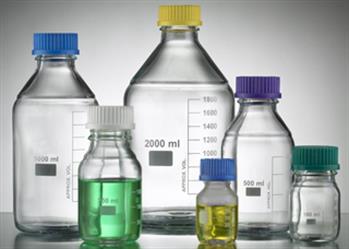
- Non-coated borosilicate glass mobile phase reservoir bottles suitable for many laboratory solvent preparation and heating applications when used according to established laboratory safety procedures.
-
View Mobile Phase Reservoir Bottle Specifications and Ordering Information
Applications
Non-coated mobile phase reservoir bottles are commonly used for:
- HPLC mobile phase preparation
- UHPLC solvent preparation
- LC-MS solvent handling
- Buffer preparation
- Reagent preparation
- Laboratory solution heating
- Analytical chemistry workflows
Their borosilicate glass construction provides durability and thermal resistance for many laboratory applications.
Conclusion
Non-coated borosilicate glass mobile phase reservoir bottles can be heated on laboratory hot plates when proper precautions are followed. Users should avoid allowing solutions to evaporate completely, prevent sudden temperature changes, and follow all laboratory safety procedures. Safety-coated bottles should not be heated and require separate handling considerations.