
Date: 7-MAY-2015 Last Updated: 21-AUGUST-2026
3 Methods to Avoid Sample Cleanup with Histamine, Limonin & Folic AcidIntroduction
Food and beverage samples often contain complex matrices composed of proteins, sugars, pigments, lipids, organic acids, and other naturally occurring compounds that can interfere with chromatographic analysis. As a result, many analytical methods rely on extensive sample preparation procedures before injection.
Common cleanup techniques include:
- Solid Phase Extraction (SPE)
- Liquid-liquid extraction
- Derivatization procedures
- Filtration and concentration steps
- Matrix removal workflows
While effective, these additional procedures increase:
- Analytical time
- Method complexity
- Consumable costs
- Sample handling requirements
- Opportunities for sample loss
This application note highlights three chromatographic approaches that can significantly reduce or eliminate extensive offline sample cleanup when analyzing challenging food and beverage samples.
Application Overview
Three representative compounds were selected to demonstrate matrix-management strategies:
- Histamine
- Limonin
- Folic Acid
These compounds vary significantly in chemical structure and polarity, making them useful examples for evaluating chromatographic approaches designed to simplify sample preparation.
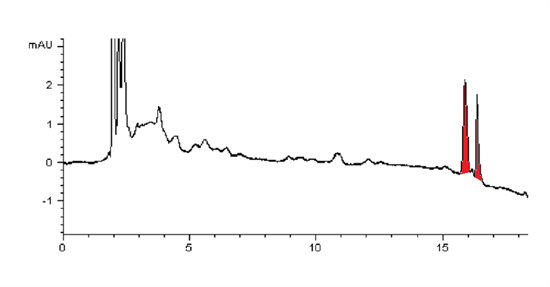
Strategy Using HILIC Retention
The first approach takes advantage of HILIC retention on Cogent™ Diamond Hydride™ columns.
Highly polar compounds such as histamine and folic acid can be retained strongly under HILIC conditions, while many less polar matrix components elute rapidly near the solvent front.
Potential advantages include:
- Reduced matrix interference
- Improved analyte selectivity
- Minimal sample preparation
- LC-MS compatibility
- Simplified analytical workflows
By using chromatographic selectivity rather than extensive sample cleanup, the method can separate target analytes from many matrix components directly on the column.
Strategy Using Integrated Column Washing
The second approach incorporates a dedicated column-cleaning step directly into the chromatographic sequence.
Complex food and beverage samples often contain compounds that may gradually accumulate on the stationary phase during repeated injections.
Incorporating a wash segment into the analytical sequence can help:
- Remove strongly retained contaminants
- Reduce carryover
- Minimize matrix buildup
- Maintain retention reproducibility
- Extend column performance
This strategy allows laboratories to process more samples while minimizing the need for frequent manual cleaning procedures.
Strategy Using LC-MS Selectivity
The third approach utilizes the selectivity of LC-MS detection.
When operating LC-MS systems, analytes can be monitored using:
- Specific m/z values
- Extracted ion chromatograms (EICs)
- Targeted mass transitions
This allows analysts to focus on the analyte of interest while reducing the influence of co-eluting matrix compounds.
Benefits include:
- Enhanced specificity
- Improved sensitivity
- Reduced matrix interference
- Simplified sample preparation
- Increased confidence in analyte identification
In many applications, LC-MS detection can dramatically reduce sample-cleanup requirements.
Benefits for Food and Beverage Laboratories
Reducing sample preparation can provide significant operational advantages.
Potential benefits include:
- Faster sample processing
- Higher laboratory throughput
- Reduced consumable costs
- Less analyst time
- Lower risk of analyte loss
- More efficient workflows
These advantages are particularly valuable in high-volume testing environments.
Example Applications
The approaches described in this study are applicable to a wide variety of food and beverage analyses, including:
- Histamine monitoring
- Beverage testing
- Nutritional analysis
- Food quality control
- Ingredient verification
- Trace compound analysis
- LC-MS screening methods
The concepts may be extended to many additional analytes that present similar matrix-related challenges.
Complete Application Note
The complete application note contains:
- Method conditions
- Chromatograms
- Mobile phase compositions
- Sample preparation details
- Analytical results
- Performance data
Refer to the attached PDF for the complete technical study.
Key Takeaways
- Complex food and beverage matrices often require extensive sample cleanup.
- HILIC retention can separate polar analytes from many matrix interferences.
- Integrated column-wash procedures help manage strongly retained contaminants.
- LC-MS detection provides additional selectivity through extracted ion chromatograms.
- Histamine, limonin, and folic acid demonstrate how chromatography can reduce reliance on offline cleanup procedures. Simplified workflows can improve laboratory efficiency, throughput, and reproducibility.

Avoid Sample Cleanup for Food and Beverages Minimal Matrix Effects.pdf
Download File