
Why Use Safety-Coated Mobile Phase Bottles?
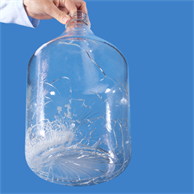
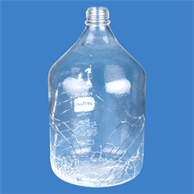
Safety-coated mobile phase bottles combine the chemical resistance of laboratory-grade borosilicate glass with an external protective coating designed to enhance laboratory safety.
If a bottle is accidentally broken:
- The coating helps contain glass fragments.
- Solvent release may be reduced.
- Cleanup is often easier and safer.
- The risk of exposure to broken glass may be minimized.
Compatible Uses
Under normal laboratory operating conditions, safety-coated mobile phase bottles are compatible with many routine activities.
Suitable Conditions
- HPLC and UHPLC mobile phase storage
- Routine laboratory handling
- Standard laboratory labeling
- Marker and pen identification
- Adhesive labels and tape
- Moderate-temperature dishwasher cleaning
- Limited microwave exposure when temperature limits are observed
These conditions generally do not adversely affect the protective coating.
Temperature Limitations
The protective coating surrounding the bottle is not designed for extreme temperature exposure.
Avoid Exposure To
- Dry heat above 110°C
- Open flames
- Bunsen burners
- Direct contact with hot plates
- Autoclave cycles above 121°C
- Temperatures below -20°C
Exposure to these conditions may result in:
- Coating softening
- Cracking
- Discoloration
- Reduced containment performance
- Premature coating failure
Pressure Limitations
Safety-coated bottles are not pressure vessels.
Do Not Use These Bottles For
- Pressurized solvent storage
- Compressed gas applications
- Positive-pressure systems
- Any application involving significant internal pressure
The protective coating is designed to contain breakage events, not to reinforce the bottle against pressure.
Impact Protection Clarification
A common misconception is that the coating prevents the bottle from breaking. It does not.
The purpose of the coating is:
- To help retain broken glass
- To reduce solvent spillage after breakage
- To improve laboratory safety during accidental drops
The coating is a containment system, not an impact-proof barrier.
If sufficient force is applied, the glass bottle can still break.
Labeling and Identification
Users may safely identify and label bottles using:
- Permanent markers
- Laboratory labels
- Identification tape
- Color-coding systems
These materials do not normally damage the coating and can assist with laboratory organization and solvent identification.
Best Practices
To maximize bottle life and maintain safety performance:
- Handle bottles carefully during transport and use.
- Avoid unnecessary exposure to high temperatures.
- Avoid freezing conditions below -20°C.
- Never place bottles under pressure.
- Inspect coatings periodically for signs of damage.
- Replace bottles that exhibit coating degradation or significant wear.
Key Takeaways
- Safety-coated bottles are designed to contain glass fragments and solvents if breakage occurs.
- The coating is not intended to prevent breakage.
- Do not expose bottles to temperatures above 110°C or below -20°C.
- Do not use safety-coated bottles in pressurized applications.
- Labels, markers, and tapes may be used safely for bottle identification.
- Always retain the manufacturer's compatibility chart as a quick-reference guide for users.