
Overview
Tubing connections are a critical but often overlooked component of chromatographic systems. Even when using high-performance columns, properly optimized methods, and well-maintained instruments, poor tubing connections can introduce dead volume that degrades separation quality.
One of the most common causes of unwanted dead volume is an improperly cut section of stainless steel tubing. Angled cuts, burrs, crushed tubing ends, and uneven surfaces can disrupt the flow path and negatively affect chromatographic performance.
Pre-cut stainless steel tubing is designed to eliminate these issues by providing clean, square, burr-free tubing ends that support optimal fitting engagement and low-dead-volume connections.
Why Tubing End Quality Matters
The end of the tubing directly affects how the tubing interfaces with fittings, unions, detectors, valves, and HPLC columns.
Poor tubing cuts may result in:
- Dead volume
- Peak broadening
- Reduced efficiency
- Loss of resolution
- Leaks
- Flow path turbulence
- Reduced reproducibility
As peak widths become smaller in modern HPLC and UHPLC methods, the impact of poor tubing preparation becomes increasingly significant.
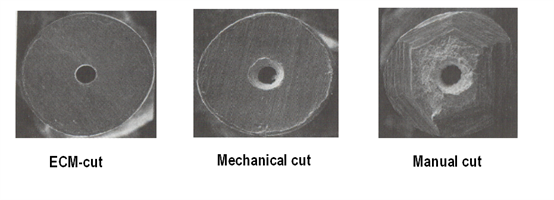
Precision-Cut Tubing Manufacturing
ARE™ Applied Research pre-cut stainless steel tubing is manufactured using precision cutting techniques designed to produce highly consistent tubing ends.
Benefits include:
- Square-cut tubing faces
- Burr-free internal openings
- Consistent internal diameter geometry
- Improved fitting engagement
- Reduced connection variability
These characteristics support low-dead-volume connections throughout the chromatographic system.
Benefits of Burr-Free Connections
A properly cut tubing end can help maintain the integrity of the flow path by reducing areas where sample dispersion may occur.
Potential benefits include:
- Improved peak shape
- Higher column efficiency
- Reduced extracolumn dispersion
- Better method reproducibility
- Improved LC-MS performance
- More reliable fluidic connections
These improvements are especially valuable for high-efficiency analytical methods.
Elimination of Manual Cutting Variables
Cutting stainless steel tubing manually can be challenging.
Common problems include:
- Angled cuts
- Burred edges
- Partially collapsed tubing
- Uneven end surfaces
- Inconsistent insertion depth
Pre-cut tubing eliminates these variables and provides consistent connection quality from installation to installation.
Common Tubing Dimensions
Pre-cut tubing is available in dimensions commonly used for HPLC and LC-MS applications.
Typical internal diameters include:
- 0.005"
- 0.007"
- 0.040"
Standard outside diameter:
- 1/16"
Available lengths typically include:
- 5 cm
- 10 cm
- 20 cm
- 30 cm
- 50 cm
Selecting the shortest practical tubing length can help reduce system volume and improve chromatographic performance.
Selecting the Appropriate Internal Diameter
Narrow Internal Diameter Tubing
Smaller IDs are commonly used for:
- UHPLC
- LC-MS
- Microflow applications
- High-efficiency separations
Benefits include:
- Reduced system volume
- Lower dispersion
- Improved chromatographic efficiency
Larger Internal Diameter Tubing
Larger IDs may be preferred for:
- Higher flow applications
- Semi-preparative methods
- Areas where backpressure reduction is important
Selection should be based on system requirements and application goals.
Importance for LC-MS and UHPLC
Modern LC-MS and UHPLC methods frequently generate very narrow chromatographic peaks.
Under these conditions, even small amounts of dead volume can have measurable effects on:
- Peak width
- Sensitivity
- Resolution
- Quantitation accuracy
Precision-cut tubing helps minimize these effects by maintaining a more efficient flow path between system components.
Key Takeaways
- Tubing cut quality directly affects chromatographic performance.
- Burrs, angled cuts, and collapsed tubing ends can introduce dead volume.
- Precision-cut stainless steel tubing helps reduce band broadening and improve efficiency.
- Consistent tubing geometry supports reliable high-pressure sealing.
- Short tubing lengths and appropriately sized internal diameters help optimize system performance.
- Pre-cut tubing eliminates many common issues associated with manual tubing preparation.
Additional Resources
For tubing dimensions, internal diameter options, pressure ratings, connection hardware, and installation guidance, view: