Date: 18-August-2026 Last Updated: 20
-August-2026
This method demonstrates effective retention and resolution of two important carbohydrates, glucose and maltose, using a Cogent Diamond Hydride™ column operated under HILIC conditions. Complete separation was achieved using a simple isocratic mobile phase, providing excellent peak shape and reproducibility.
Because these carbohydrates lack strong UV chromophores, ELSD detection offers a practical and sensitive solution for routine analysis. The isocratic nature of the method also makes it suitable for adaptation to refractive index (RI) detection when desired.
Figure 1. Overlay of five chromatograms showing excellent retention time reproducibility and peak response consistency for five injections
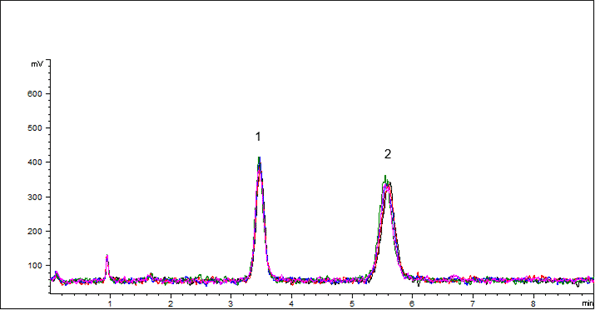
Peaks: 1. Glucose 2. Maltose
Column: Cogent Amide Hydride™, 4 µm, 100 Å
Catalog No.: 40036-10P
Dimensions: 4.6 x 100 mm
Mobile Phase: 85% Acetonitrile 15% DI Water + 0.1% TEA
Flow Rate : 1.0mL / minute
Injection Volume : 1uL
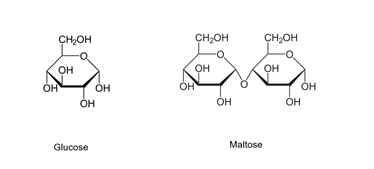
Note: Maltose is often called "malt sugar" because it is produced when starch breaks down during seed germination and the malting process used in brewing. Maltose consists of two glucose molecules linked together, making it a disaccharide derived entirely from glucose.