
Custom Plate Measurements for the U-2D Micro-Sample Management System in the Waters Acquity Software - Tech Information
December 22, 2016
/
/
Date: 22-DECEMBER-2016 Last Updated: 10-AUGUST-2026
It is always best to consult the user manual for any changes or options before making adjustments to you instruments. Below some notes that you might find helpful
The Waters Acquity™ UHPLC chromatography software is programmable for X,Y,Z sampling. The pre-existing configurations are pre-programmed and stored for customers to get up and running fast. The system expects to hit resistance within some tolerance of the configured heights, or it will error. This is a 'fail-safe' to prevent damage to the autosampler if the user had the wrong configuration plate or vial loaded into the sample method.
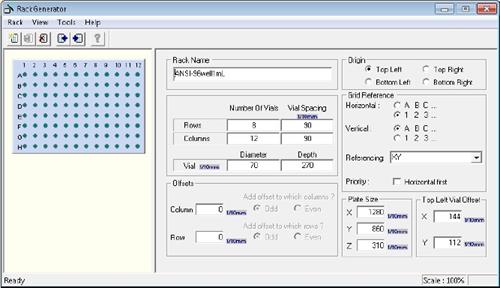
If you want to set a custom plate, an example would be taking a 1ml ANSI plate that has a 7mm ID well, a 27mm depth, and a height of 31mm. If you bring up a plate, modify the dimensions and save it as another name, you should be all set. See below.
The U-2D™ plate is ANSI/SLAS (Society For Laboratory Automation and Screening) compliant and conforms to SBS standards and follows the ANSI/SLAS Microplate Standards and when the Rack and Base are mated is virtually indistinguishable from existing glass insert 96 Formatted well plates (and similar).
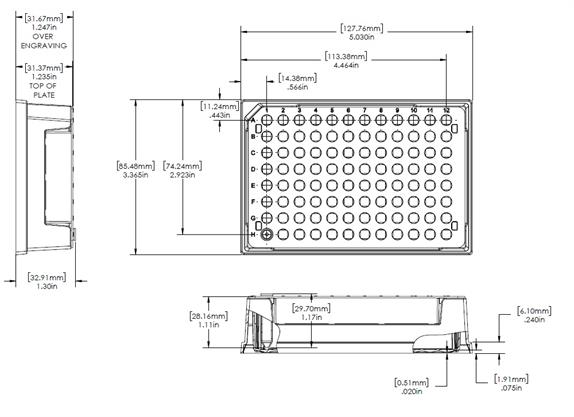
ANSI/SLAS Microplate Standards (ANSI/SLAS 1 to 4 – 2004)
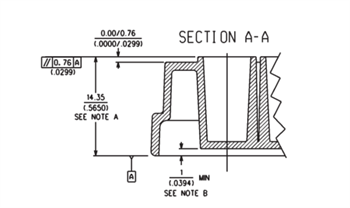
Mechanical Drawings Defining Height Of A Typical Microplate
The Society For Laboratory Automation And Screening (SLAS) is not a standardizing organization; they are a society that provides a working group the ability and platform to standardize along with the American National Standards Institute (ANSI).
Dimensions of the U-2D plates:
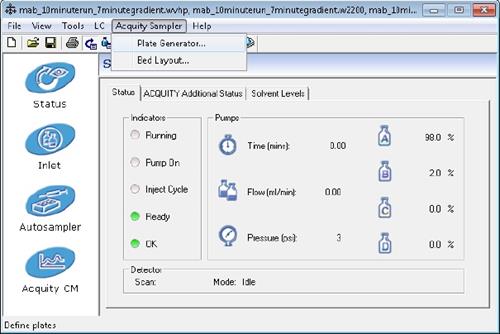
Open inlet method:
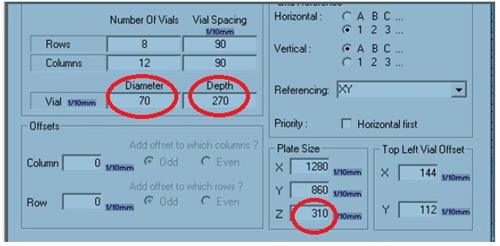
Modify X, Y, Z:
1. Using the blue arrows at the top, select through the different plates that are already programmed.
2. Select Rack > New Rack to save new plate types.
3. Modify any of the dimensions
4. Select Rack > Save Current Rack
It is always best to consult the user manual for any changes or options before making adjustments to you instruments. Below some notes that you might find helpful
The Waters Acquity™ UHPLC chromatography software is programmable for X,Y,Z sampling. The pre-existing configurations are pre-programmed and stored for customers to get up and running fast. The system expects to hit resistance within some tolerance of the configured heights, or it will error. This is a 'fail-safe' to prevent damage to the autosampler if the user had the wrong configuration plate or vial loaded into the sample method.
If you want to set a custom plate, an example would be taking a 1ml ANSI plate that has a 7mm ID well, a 27mm depth, and a height of 31mm. If you bring up a plate, modify the dimensions and save it as another name, you should be all set. See below.
The U-2D™ plate is ANSI/SLAS (Society For Laboratory Automation and Screening) compliant and conforms to SBS standards and follows the ANSI/SLAS Microplate Standards and when the Rack and Base are mated is virtually indistinguishable from existing glass insert 96 Formatted well plates (and similar).
ANSI/SLAS Microplate Standards (ANSI/SLAS 1 to 4 – 2004)
Mechanical Drawings Defining Height Of A Typical Microplate
The Society For Laboratory Automation And Screening (SLAS) is not a standardizing organization; they are a society that provides a working group the ability and platform to standardize along with the American National Standards Institute (ANSI).
Dimensions of the U-2D plates:
Open inlet method:
Modify X, Y, Z:
1. Using the blue arrows at the top, select through the different plates that are already programmed.
2. Select Rack > New Rack to save new plate types.
3. Modify any of the dimensions
4. Select Rack > Save Current Rack
- View ANSI/SLAS Microplate Footprint Dimension Standards (PDF)
- View ANSI/SLAS Microplate Height Dimension Standards (PDF)
- View ANSI/SLAS Microplate Bottom Outside Flange Standards (PDF)
- View ANSI/SLAS Microplate Well Position Standards (PDF)
- View ANSI/SLAS Microplate Well Bottom Elevation Standards (PDF)