Introduction
Many highly polar compounds are challenging to analyze using traditional reversed phase chromatography. As a result, HILIC methods are often selected because they provide strong retention of polar analytes while remaining compatible with LC-MS detection. However, one aspect of HILIC method development that is sometimes overlooked is the impact of mobile phase additive concentration.
Some HILIC methods rely on relatively high concentrations of salts and buffers to achieve desired retention and selectivity. While these additives can influence chromatographic performance, they may also introduce challenges for LC-MS systems.
Understanding these effects can help analysts balance retention, sensitivity, and long-term instrument performance.
Why Salt Is Used in HILIC Methods
Mobile phase additives are commonly used to:
- Control pH
- Improve retention
- Modify selectivity
- Improve peak shape
- Enhance reproducibility
Common additives include:
- Ammonium acetate
- Ammonium formate
- Ammonium fluoride
- Volatile acids and bases
The amount required depends on:
- The stationary phase
- The analyte chemistry
- The desired selectivity
- The analytical method
Effects of High Salt Concentrations on LC-MS Systems
As mobile phase salt concentration increases, more non-volatile material enters the ion source.
Over time this can contribute to:
- Salt accumulation
- Source contamination
- Reduced ionization efficiency
- Increased maintenance frequency
The effect is often most noticeable during high-throughput operation or long analytical sequences.
Common symptoms include:
- Declining signal intensity
- Increased background noise
- Reduced sensitivity
- Source contamination warnings
- More frequent cleaning requirements
Ion Suppression Considerations
Ion suppression is a common concern in LC-MS method development. When excessive concentrations of salts compete with analytes during the ionization process, the resulting signal can be reduced.
Potential consequences include:
- Lower analyte response
- Reduced sensitivity
- Increased detection limits
- Reduced quantitative performance
For trace-level analyses, minimizing unnecessary additive concentrations can sometimes improve overall analytical performance.
LC-MS Source Contamination
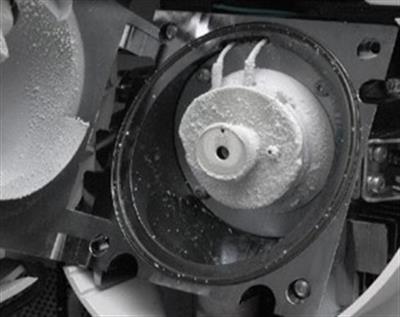
Salt deposition inside an LC-MS source can gradually affect instrument operation.
Accumulation may occur on:
- Source housings
- Sampling cones
- Ion transfer optics
- Interfaces
- Transfer pathways
Routine source cleaning can mitigate these effects, but lower salt usage may help reduce contamination rates.
Hardware Considerations
In addition to influencing LC-MS performance, elevated salt concentrations may contribute to long-term stress on chromatographic hardware if systems are not appropriately flushed after use.
Potential areas affected include:
- Frits
- Tubing
- Fittings
- Injector components
- Pump components
Good laboratory practices include:
- Proper post-run flushing
- Routine system maintenance
- Appropriate storage procedures
- Monitoring pressure trends
HILIC Methods on TYPE-C™ Columns
Cogent™ TYPE-C™ columns are widely used for HILIC analysis of polar compounds.
One practical advantage frequently observed during method development is effective retention using relatively low concentrations of volatile additives.
Depending on the application, methods often employ:
- Low levels of ammonium acetate
- Low levels of ammonium formate
- Formic acid
- Acetic acid
- Other MS-compatible additives
Lower additive requirements can be beneficial for:
- LC-MS sensitivity
- Source cleanliness
- Instrument uptime
- Method robustness
Method Development Considerations
When optimizing HILIC LC-MS methods: Evaluate the Minimum Effective Additive Concentration
Use only the concentration necessary to achieve acceptable chromatographic performance.
- Monitor MS Response: Assess signal intensity alongside retention and peak shape.
- Consider Long-Term Operation: Methods that perform well during a short development study may behave differently after hundreds of injections.
- Track Source Cleanliness: Monitoring maintenance intervals can provide valuable insight into mobile phase suitability.
Balancing Retention and Sensitivity
Successful HILIC LC-MS methods balance several competing factors:
- Retention
- Selectivity
- Peak shape
- Sensitivity
- Reproducibility
- Instrument maintenance
The most robust methods are often those that achieve acceptable chromatography with the lowest effective additive concentration.
Key Takeaways
- Mobile phase salts play an important role in many HILIC methods.
- Excessive salt concentrations may contribute to ion suppression and reduced LC-MS sensitivity.
- Salt buildup can contaminate LC-MS sources and increase maintenance requirements.
- Long-term exposure to high salt loads may affect chromatography and instrument hardware.
- Lower additive concentrations often improve LC-MS compatibility.
- TYPE-C™ HILIC columns can frequently provide effective retention while minimizing additive requirements