
Ketoglutaric Acid Analyzed by HPLC with a Dursan Coated Column - AppNote
May 13, 2022
/
/
Separation of a key component in the Krebs Cycle with improved peak shape using a metal free coated stainless-steel column
Met hod Conditions:
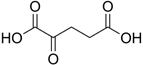
Note: α-ketoglutaric acid is one of two ketone derivatives of glutaric acid. The term "ketoglutaric acid," when not further qualified, almost always refers to the alpha variant. β-ketoglutaric acid varies only by the position of the Ketone functional group and is much less common.

As α-ketoglutarate is one of the most important nitrogen transporters in metabolic pathways, it is of particular value to quantify all metabolic analytes and maintain data integrity. This compound interacts with stainless steel and is known to have substandard peak shapes in HPLC.
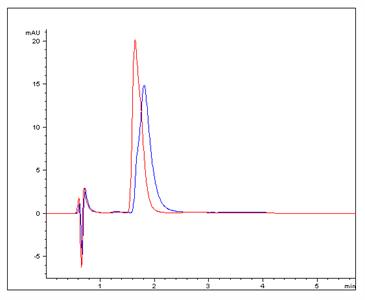
This data below highlights important chromatographic performance improvements between a hydrophobic, metal free Dursan coated stainless steel HPLC column and an untreated stainless-steel column with the same packing material and method conditions on the same instrument. Metal free surface treatments are available on all Cogent HPLC columns.
Peak:
α-Ketoglutaric acid
| Trace Above | Hardware | Width (minutes) | Plates (N) |
| Red | Metal Free Dursan Coated | 0.1833 | 436 |
| Blue | Stainless Steel | 0.2533 | 279 |
Met hod Conditions:
Column: Cogent Diamond Hydride™, 4 μm,100 Å
Catalog Nos.: 70000-10D-2 70000-10P-2
Dimensions of both columns: 2.1 x 100 mm
Mobile Phase:
-- A: DI / 10mM ammonium formate (0.5% formic acid)
-- B: 95/5 aceto nitrile / 10 mM ammonium formate
Injection vol.: 2μL
Flow rate: 0.3 mL / minute
Detection: 254 nm
Sample Preparation: α-ketoglutarate 1 mg / mL in DI water
Catalog Nos.: 70000-10D-2 70000-10P-2
Dimensions of both columns: 2.1 x 100 mm
Mobile Phase:
-- A: DI / 10mM ammonium formate (0.5% formic acid)
-- B: 95/5 aceto nitrile / 10 mM ammonium formate
Injection vol.: 2μL
Flow rate: 0.3 mL / minute
Detection: 254 nm
Sample Preparation: α-ketoglutarate 1 mg / mL in DI water
Note: α-ketoglutaric acid is one of two ketone derivatives of glutaric acid. The term "ketoglutaric acid," when not further qualified, almost always refers to the alpha variant. β-ketoglutaric acid varies only by the position of the Ketone functional group and is much less common.