
Overview
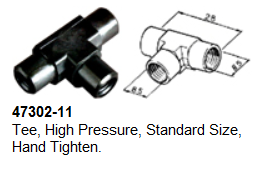
Tee and cross connectors are commonly used in HPLC systems to combine flow paths, direct solvent streams, or incorporate auxiliary devices. Although often referred to as "tee fittings," many of these components function as high-pressure unions and require proper compression hardware to operate safely and reliably.
Understanding whether a connection is located in a high-pressure or low-pressure section of the system is critical when selecting fittings and ferrules.
High-Pressure Tee and Cross Unions
In high-pressure HPLC applications, tee and cross connectors must withstand continuous operating pressures generated by the pump.
These fittings function as compression unions and require:
- Appropriate ferrules
- Matching nuts
- Proper tubing connections
- Correct installation torque
Without ferrules, high-pressure connections will typically not provide a secure seal.
Why Ferrules Are Required
Ferrules perform several important functions:
- Create a compression seal around the tubing
- Prevent solvent leaks
- Maintain system pressure
- Improve long-term connection stability
- Reduce the risk of tubing movement under pressure
The ferrule compresses between the tubing and fitting body, creating the pressure-resistant seal required in HPLC applications.
Low-Pressure Connections
Some tee configurations are used in lower-pressure portions of the system where compression ferrules are not always required.
Examples may include:
- Solvent inlet lines
- Waste pathways
- Atmospheric vent connections
- Certain auxiliary flow circuits
In these applications, flat-bottom flangeless fittings are often sufficient.
Why Ferrules May Not Be Needed at Low Pressure
Under minimal pressure conditions:
- Compression sealing may not be necessary.
- Flat-contact sealing surfaces can be effective.
- Simpler fitting designs can be used.
- Installation is often easier.
These connections are typically not exposed to the pressures encountered downstream of the HPLC pump.
Consequences of Incorrect Fitting Selection
Using the wrong connection method in a high-pressure zone may lead to:
- Solvent leaks
- Pressure loss
- Retention time instability
- Baseline disturbances
- Damaged fittings
- Connection failure
Proper matching of fittings, ferrules, tubing, and system pressure requirements helps maintain reliable chromatographic performance.
Selecting the Correct Connection Method
High-Pressure Zones
Use:
- Compression unions
- Ferrules
- Matching nuts
- Pressure-rated fittings
Low-Pressure Zones
Use:
- Flat-bottom flangeless fittings
- Appropriate low-pressure connectors
- Standard solvent transfer hardware
The pressure rating of the application should always guide fitting selection.
Best Practices
When installing tee or cross unions:
- Verify pressure requirements.
- Use ferrules in high-pressure applications.
- Inspect ferrules for wear or damage.
- Confirm tubing compatibility.
- Tighten connections according to manufacturer recommendations.
- Check connections for leaks after installation.
Proper installation improves reliability and reduces troubleshooting time.
Key Takeaways
- High-pressure HPLC tee and cross unions require ferrules.
- Ferrules create the compression seal necessary for pressure stability.
- Low-pressure fittings may operate effectively without ferrules.
- Improper fitting selection can result in leaks and pressure loss.
- The pressure zone within the HPLC system determines which connection style should be used.
- Correct installation helps maintain consistent chromatographic performance.