
Histamine Analyzed with HPLC - AppNote
May 18, 2012
/
/
/
LCMS Compatible Method for the Separation of Histamine
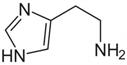
As a Heterocyclic primary amine, Histamine is a very polar compound and is difficult to retain on a Reversed Phase Column. This Method provides adequate Retention and a symmetrical Peak shape for this challenging compound without the use of ion pairing reagents in the Mobile Phase. The Method can be readily transferred to LCMS since the eluents used are MS compatible.
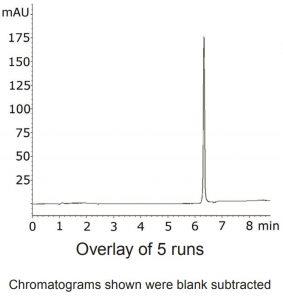
Column: Cogent Diamond Hydride™, 4 µm, 100 Å
Catalog No.: 70000-7.5P
Dimensions: 4.6 x 75 mm
Mobile Phase:
-- A: DI Water / 0.1% Formic Acid
-- B: Acetonitrile / 0.1% Formic Acid
Gradient:
Post Time: 5 minutes
Injection vol.: 1 µL
Flow rate: 0.5 mL / minute
Detection: UV @ 220 nm
Sample Preparation: Stock Solution: 1 mg / mL in 80:20 DI Water / Methanol diluent. The solution was filtered through a 0.45 µm Nylon Syringe Filter, AQ™ Brand (MICROSOLV Tech Corp.).
Working Solution: Stock solution was diluted 1:10 with 50:50 Solvent A / Solvent B mixture.
t 0 : 0.9 minutes
Note: Histamine is known for its role in allergic response. Release of Histamine plays a role in inflammation, gastric acid secretion, microcirculation and neurotransmission in mammalian brains. Measurement of Histamine levels in body fluids has been used in clinical analysis in various diseases such as Pre-eclampsia, Asthma, Cancer, Mastocytosis and in the progression of Periodontitis. Histamine is also present in many foods and beverages, especially red wine and spoiled food. Ingesting Histamine can cause migraines, sweating and nausea.

Attachment No 157 Histamine Analyzed with HPLC pdf 0.3 Mb Download File
As a Heterocyclic primary amine, Histamine is a very polar compound and is difficult to retain on a Reversed Phase Column. This Method provides adequate Retention and a symmetrical Peak shape for this challenging compound without the use of ion pairing reagents in the Mobile Phase. The Method can be readily transferred to LCMS since the eluents used are MS compatible.
Peak:
Histamine
Column: Cogent Diamond Hydride™, 4 µm, 100 Å
Catalog No.: 70000-7.5P
Dimensions: 4.6 x 75 mm
Mobile Phase:
-- A: DI Water / 0.1% Formic Acid
-- B: Acetonitrile / 0.1% Formic Acid
Gradient:
| Time (minutes) | %B |
|---|---|
| 0 | 80 |
| 5 | 30 |
| 7 | 30 |
| 8 | 80 |
Post Time: 5 minutes
Injection vol.: 1 µL
Flow rate: 0.5 mL / minute
Detection: UV @ 220 nm
Sample Preparation: Stock Solution: 1 mg / mL in 80:20 DI Water / Methanol diluent. The solution was filtered through a 0.45 µm Nylon Syringe Filter, AQ™ Brand (MICROSOLV Tech Corp.).
Working Solution: Stock solution was diluted 1:10 with 50:50 Solvent A / Solvent B mixture.
t 0 : 0.9 minutes
Note: Histamine is known for its role in allergic response. Release of Histamine plays a role in inflammation, gastric acid secretion, microcirculation and neurotransmission in mammalian brains. Measurement of Histamine levels in body fluids has been used in clinical analysis in various diseases such as Pre-eclampsia, Asthma, Cancer, Mastocytosis and in the progression of Periodontitis. Histamine is also present in many foods and beverages, especially red wine and spoiled food. Ingesting Histamine can cause migraines, sweating and nausea.
Attachment No 157 Histamine Analyzed with HPLC pdf 0.3 Mb Download File