Date: 18-SEPTEMBER-2014 Last Update: 9-SEPTEMBER-2026
Introduction
Fused insert autosampler vials are widely used for low-volume chromatography applications because they provide excellent sample positioning, reduced sample loss, and improved recovery. However, occasional insert breakage can occur during autosampler operation when the injection needle contacts the glass insert.
In many cases, the root cause is not the insert itself but a mechanical issue involving needle alignment, needle deflection, septum resistance, or autosampler setup. Understanding these factors can help laboratories reduce downtime, preserve valuable samples, and improve injection consistency.
The Most Common Cause of Insert Breakage
When a fused insert breaks during injection, many users initially suspect an insert manufacturing issue. However, the more common cause is: Autosampler needle misalignment. Even slight deviations in needle positioning can cause the needle to strike the insert wall during penetration or aspiration. Potential consequences include:
- Cracked inserts
- Broken inserts
- Incomplete injections
- Autosampler errors
- Sample loss
Regular instrument maintenance and alignment verification can help prevent these issues.
Needle Deflection During Septum Penetration
A properly aligned needle can still be pushed off course when it encounters resistance from the septum. Several factors may contribute to needle deflection.
Needle Gauge
Very thin needles may be more susceptible to bending or flexing during penetration. Factors to consider include:
- Needle stiffness
- Needle length
- Instrument design
- Septum resistance
A deflected needle may contact the insert wall even when the autosampler itself is correctly aligned.
Needle Tip Geometry
Needle tip design can influence how a needle penetrates a septum. Different needle styles may behave differently when entering the vial. Examples include:
- Beveled needles
- Flat-tip needles
- Specialty autosampler needles
Using the needle style recommended by the instrument manufacturer can help minimize deflection.
Septum Selection Matters
The septum is often the first component encountered by the needle during injection. Septa that are unusually firm, thick, or inconsistent may increase penetration resistance and contribute to needle movement. Options that may help reduce penetration forces include:
- Partial-slit septa
- Pre-slit septa
- Softer septum materials
- Soft-Guard™ septa
Reducing insertion resistance can help maintain a straighter needle path and decrease the likelihood of insert contact.
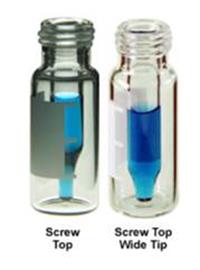
Wide Opening Fused Insert Vials
In some applications, wider opening vial designs may provide additional clearance around the needle path. Potential benefits include:
- Increased tolerance to minor alignment variations
- Reduced probability of insert impact
- Greater operational flexibility
For systems that experience recurring insert breakage, wide-opening fused insert vials may be worth considering.
Verify Autosampler Alignment
Autosampler position accuracy can drift over time due to normal mechanical wear and routine instrument use. Periodic verification of:
- Needle alignment
- X-Y positioning
- Datum position
- Home position calibration
can help maintain reliable injection performance. A small positional error may be enough to cause the needle to contact the insert wall.
Check Needle Depth Settings
Needle depth is another important consideration. If the needle travels too deeply:
- It may strike the bottom of the insert.
- The insert may fracture.
- Sampling performance may be affected.
Verify that the autosampler needle depth remains within the instrument manufacturer's recommended limits. Proper adjustment helps protect both the insert and the needle assembly.
Best Practices for Minimizing Breakage
To reduce the risk of fused insert damage:
- Verify autosampler alignment regularly.
- Check datum and home position calibration.
- Confirm proper needle depth settings.
- Use appropriate needle gauges and tip designs.
- Consider softer or pre-slit septa when appropriate.
- Evaluate wide-opening fused insert vials for demanding applications.
- Inspect needles periodically for damage or bending.
These simple maintenance practices can significantly extend insert life and improve injection reliability.
Product Information
Conclusion
Fused insert vial breakage is more commonly associated with autosampler setup and needle alignment issues than with the insert itself. Needle deflection, improper depth settings, septum resistance, and positional drift can all contribute to glass breakage during injection. By verifying alignment, optimizing septum selection, and maintaining proper autosampler settings, laboratories can reduce insert damage and improve overall analytical reliability.