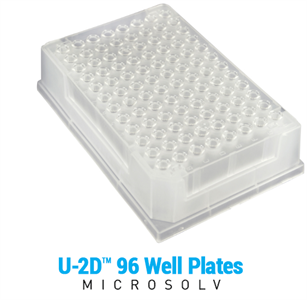
The U‑2D™ Micro‑Sample Management System is widely used for sample preparation, micro‑volume storage, and direct autosampler injection workflows. Because many laboratories also incorporate centrifugation steps—either to pellet particulates, clear solutions, or support filtration—it is important to understand how the U‑2D system behaves under centrifugal force.
Compatibility with Centrifugation
Yes, the U‑2D™ system can be centrifuged, provided that the rack is properly nested inside the Base. When used together, the Base and Rack function similarly to a conventional ANSI‑format 96‑well microtiter plate, ensuring balanced support and structural stability during rotation.
Verified Centrifugation Limits
The U‑2D system has been tested and confirmed to operate normally at speeds up to:
- 2,500 × g
This threshold supports a wide range of standard centrifugation applications, such as:
- Light particulate sedimentation
- Clarification of sample solutions
- Pre‑analysis cleanup steps
Users should always ensure that the centrifuge hardware (plate carriers, adapters, or swinging‑bucket rotors) is compatible with the U‑2D’s plate height and footprint.
Operational Considerations
To maintain performance and avoid damage:
-
Always nest the Rack and Base together before centrifugation.
This ensures uniform force distribution across the insert matrix. - Avoid exceeding 2,500 × g, as higher forces have not been validated and may stress the system.
- Confirm that the centrifuge’s plate adapter provides full support beneath the U‑2D assembly.
- If using filtration or SPE plates stacked above the U‑2D system, ensure they do not transfer mechanical load, which may cause anomalies or failure.
Practical Applications
Centrifugation compatibility makes the U‑2D system suitable for:
- High‑throughput sample prep workflows
- Pre‑LC/MS cleanup
- Micro‑volume solvent exchange
- Clarifying samples prior to autosampler injection
This capability enhances the U‑2D system’s utility as a flexible micro‑sample preparation and management platform.