
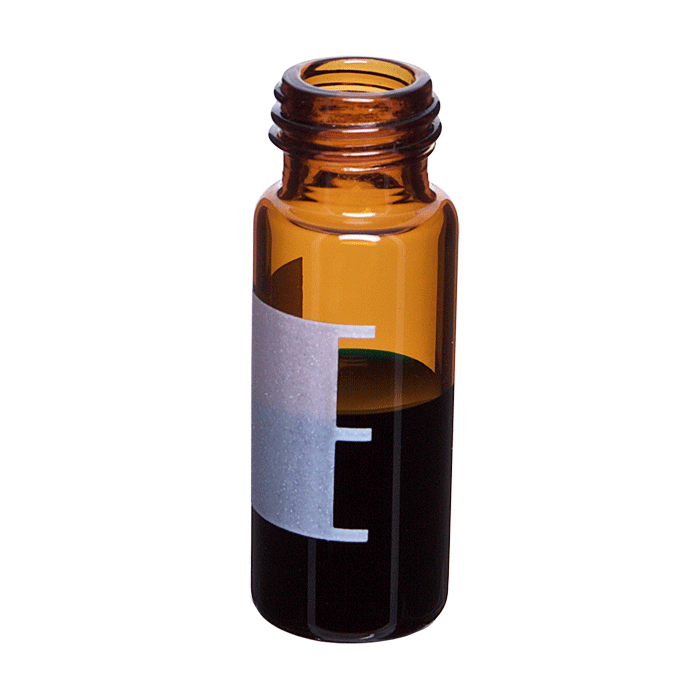
Vials, Screw Top, Glass. Amber, 2ml, with Write-On Patch and fill lines, 9-425mm threads, 12x32mm outer dimensions. For use as an autosampler vial or storage bottle. AQ Brand. 100/PK.
Additional Information:
The 9509S‑WAV‑AQ AQ™ Amber Screw‑Top Autosampler Vial is a high‑quality, cost‑effective solution for chromatography applications involving light‑sensitive compounds. Manufactured from first hydrolytic, Class A, Type N51A amberized borosilicate glass, these vials provide consistent performance, low extractables, and reliable compatibility with modern autosamplers.
The integrated ceramic write‑on patch and fill lines allow durable labeling that resists smearing or scratching, even when exposed to aggressive solvents. Precision‑controlled vial geometry ensures accurate injection depth, maximum sample recovery, and protection of autosampler needles.
This vial offers functional performance comparable to Waters® Certified vial 186000848, providing laboratories with a dependable alternative without sacrificing quality or instrument compatibility.
Key Features
Amber Type N51A Borosilicate Glass
First hydrolytic, Class A glass for chemical consistency
Amberized to protect light‑sensitive analytes
Low extractables and leachables for analytical reliability
Durable Ceramic Write‑On Patch and Fill Lines
Permanently fired ceramic labeling surface
Resists solvent attack, smearing, and scratching
Fill lines support consistent sample preparation
Precision‑Engineered for Autosampler Safety
Bottom depths and vial heights are tightly controlled
Designed for maximum sample recovery
Helps protect autosampler needles from impact or damage
Why Choose AQ™ Amber Screw‑Top Vials?
AQ™ amber vials are designed for laboratories that require light protection, consistency, and cost efficiency. These vials:
Match the practical performance of premium “certified” vials
Maintain compliance with instrument manufacturer specifications
Reduce consumable costs without compromising analytical integrity
They are widely used in pharmaceutical, environmental, and research laboratories handling photosensitive samples.
Typical Applications
HPLC, UHPLC, and LC‑MS autosampling
Light‑sensitive compounds
Routine analytical and regulated methods
Sample preparation and short‑term storage