
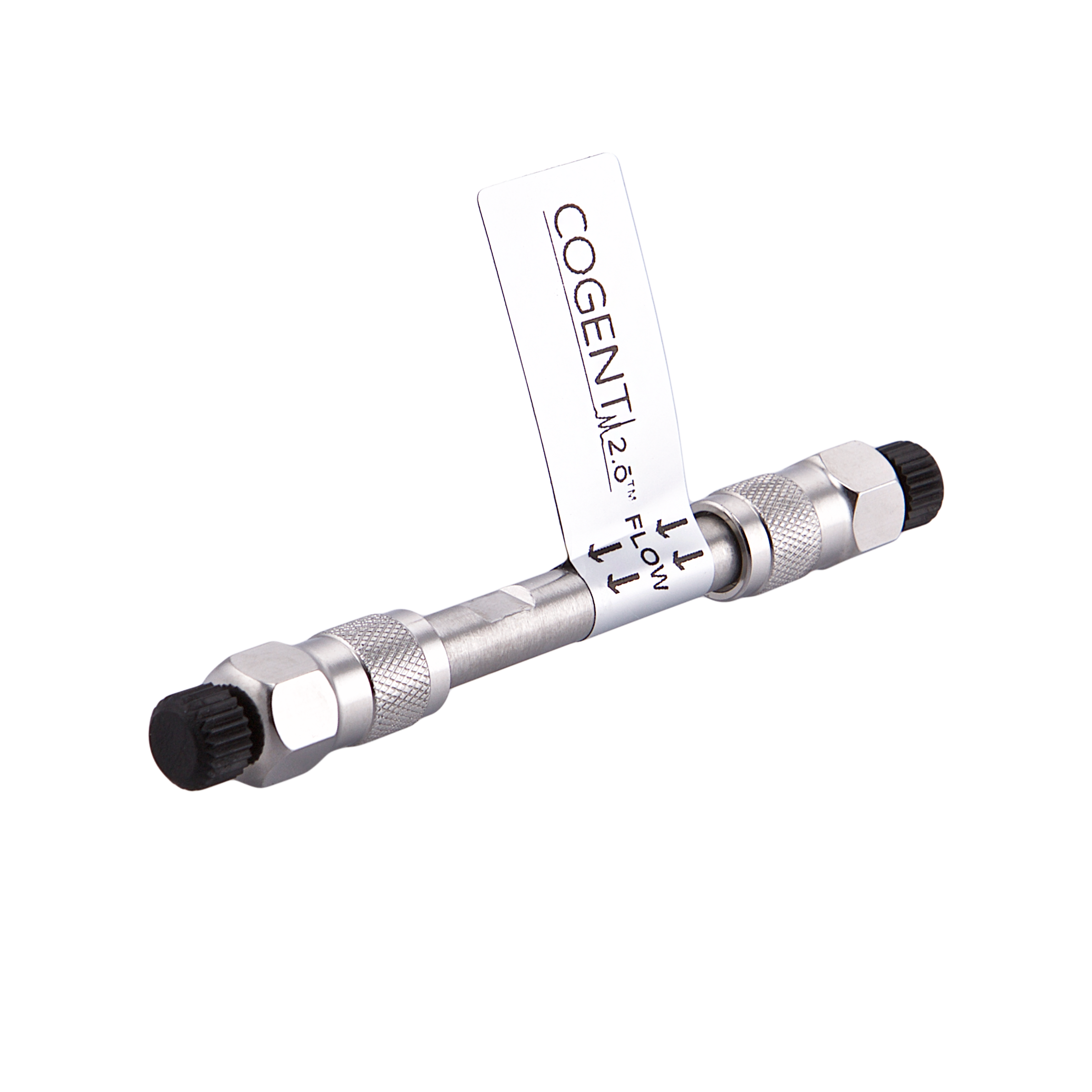
HPLC Column, Silica-C 2.o, 2.2um, 2.1mm ID x 50mm Length, 120A, High Pressure. Cogent TYPE-C Brand. 1 EA.
Additional Information:
The 40200‑05P‑2 Silica‑C™ 2.o HPLC Column is manufactured using Cogent TYPE‑C™ silica hydride technology, delivering a “near‑UHPLC” level of performance with 2.2 µm particles and 120 Å pore size under high‑pressure analytical conditions. Unlike conventional bonded‑silica columns, the silica hydride surface provides faster equilibration, improved robustness, and greater method stability, particularly in HILIC and normal‑phase separations.
This column is optimized for applications where non‑aqueous or low‑water mobile phases are required and where traditional silica phases present equilibration or moisture‑control challenges.
Application Focus: Silica‑C™ for HILIC & Normal‑Phase Separations
Silica‑C™ stationary phases are selected for the analysis of compounds that are poorly soluble in water or require non‑polar or minimally aqueous mobile phases. The Silica‑C™ 2.o phase is particularly effective for:
Lipids
Peptides and proteins
Oligonucleotides
Other compounds requiring non‑polar solvents or HILIC conditions
The TYPE‑C™ silica hydride surface provides enhanced stability and reproducibility compared to traditional silica, supporting reliable retention without the variability often caused by water adsorption.
Key Benefits of Silica‑C™ TYPE‑C™ Technology
Compared to conventional silica columns, Silica‑C™ columns provide:
Faster equilibration between runs
No need to control moisture in mobile‑phase solvents
Robust column lifetime under demanding solvent systems
Improved method reproducibility in HILIC and normal‑phase workflows
These advantages make Silica‑C™ a preferred choice for laboratories seeking consistent performance in non‑aqueous separations.
Why Choose the 2.1 mm × 50 mm Format
The 2.1 mm ID × 50 mm length configuration is optimized for speed, efficiency, and LC‑MS compatibility:
Short run times and high sample throughput
Rapid equilibration between injections
Reduced solvent consumption
Lower flow to the detector or MS source, improving sensitivity
This narrow‑bore format is especially attractive for LC‑MS workflows where solvent efficiency and fast analysis are critical.
Particle Size and Efficiency
The 2.2 µm particle size delivers high separation efficiency and sharp peak shapes under high‑pressure operation, providing near‑UHPLC performance while remaining compatible with many modern analytical HPLC systems.
System Requirements and Flow Rates
Typical flow range (2.1 mm ID): ~0.2–0.3 mL/min
System capability: Requires an HPLC system capable of accurate, stable low‑flow delivery
Important note: Not all standard HPLC systems are suitable for reliable operation at these reduced flow rates
Final flow‑rate selection should consider mobile‑phase viscosity, column temperature, and system pressure limits.